

There's a quiet shift happening in how people think about energy. The third cup of coffee isn't landing the way it used to. The 3 p.m. jitters, the racing heart, the dip that follows — more and more people are looking for vitality that doesn't come from caffeine. If that's you, Korean red ginseng is worth understanding, because it approaches the whole idea differently.
First, the honest part: ginseng isn't a stimulant
Let's be clear up front, because this matters. Korean red ginseng is caffeine-free. It is not a caffeinated energy drink in disguise, and it won't give you the sharp, fast spike that coffee or an energy shot does. So if you're chasing that exact hit, ginseng isn't a like-for-like swap.
What it offers is a different category of thing. Ginseng belongs to a small family of botanicals called adaptogens — plants studied for helping the body adapt to physical and mental load rather than overriding it with a stimulant. There's no caffeine to wear off, which is why people describe the experience as steady rather than spiky: no crash, no jitters, because there was never a stimulant peak to fall from. (If "adaptogen" is new to you, we explained the history of the word here.)
Caffeine vs. adaptogen, simply put: caffeine works by blocking the signals that tell you you're tired — it borrows energy you'll pay back later. An adaptogen isn't borrowing anything; it's a plant traditionally associated with supporting the body's own steadiness. Different mechanism, different feeling.
Why people are reaching for it now
A few reasons keep coming up. Some people are simply caffeine-sensitive — coffee leaves them wired, anxious, or unable to sleep. Some have hit their limit and want to cut back without feeling flat. And some are looking for something with more behind it than a jolt: ginseng carries a 2,000-year history of being taken for vitality, and its active compounds — ginsenosides plus a range of non-saponin compounds — are associated with supporting healthy energy and resilience over time, not just in the next twenty minutes.
That "over time" part is key. Ginseng isn't built around a single dramatic moment. It's traditionally taken consistently, as a daily ritual, which is a very different relationship than the one most people have with their coffee.
How to actually fold it into your day
You don't have to quit coffee to start. Most people ease ginseng in alongside their existing routine and adjust from there:
- Morning, with or before coffee. Take a stick on an empty stomach, and if you still want coffee, have it about an hour later. Many people find they reach for the second and third cup less over time.
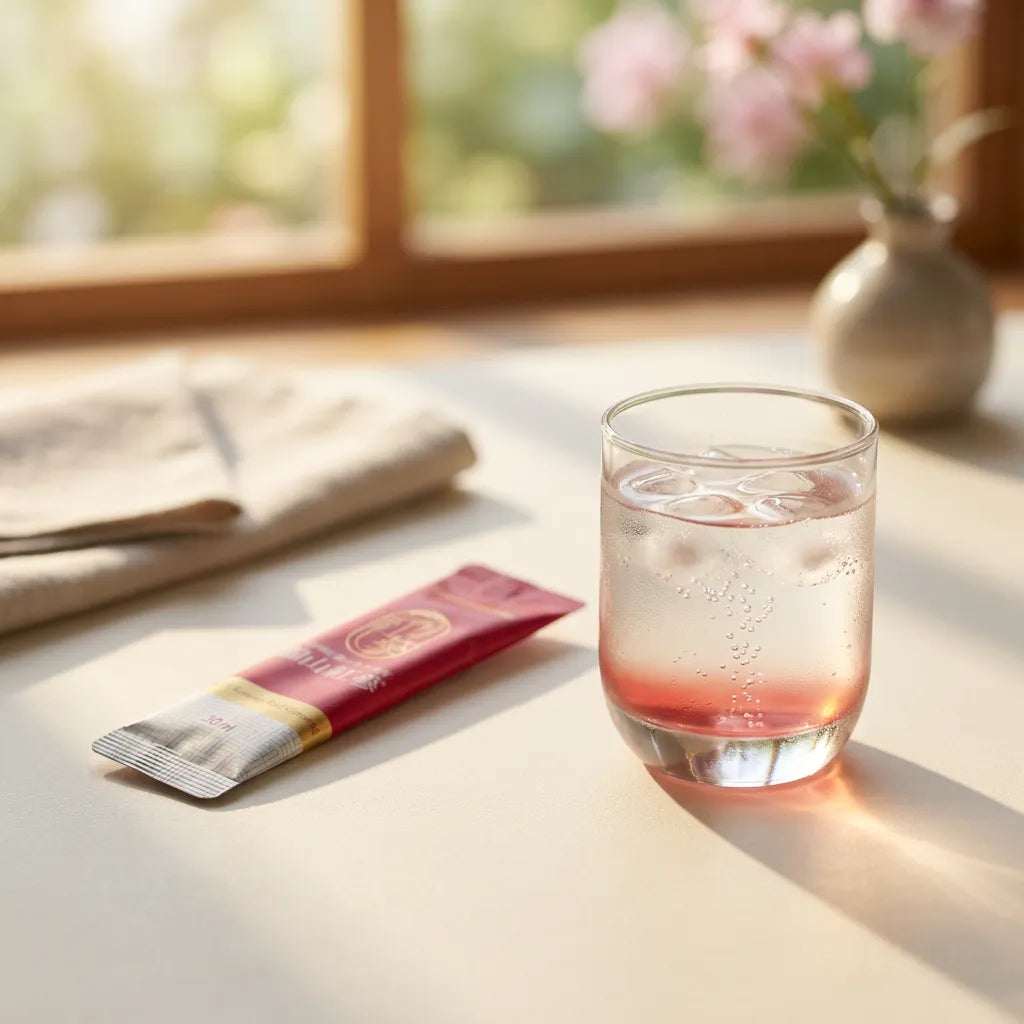
- The afternoon swap. Instead of the 3 p.m. coffee that wrecks your sleep, try a stick — straight, or stirred into iced water. Caffeine-free means it won't follow you to bedtime.
- Around movement. A stick 20 minutes before a workout, or stirred into a post-workout protein shake, fits naturally into an active routine.
A quality ginseng stick is built for exactly this — 30 ml, honey-smooth, portable, no brewing. The taste is rich rather than bitter, which is part of why a daily habit actually sticks.
A calmer kind of energy Dr. Choi's Korean Red Ginseng is caffeine-free, made from 6-year Geumsan roots by a pharmacist, and built as a 30 ml daily ritual — honey-smooth, no brewing, lab-tested every batch.
Explore the ginseng →* These statements have not been evaluated by the Food and Drug Administration. This product is not intended to diagnose, treat, cure, or prevent any disease. Adaptogen research is ongoing and individual responses vary. This article is for educational purposes and is not medical advice; if you are pregnant, nursing, taking medication, or managing a health condition, consult a qualified healthcare professional before starting any supplement.